
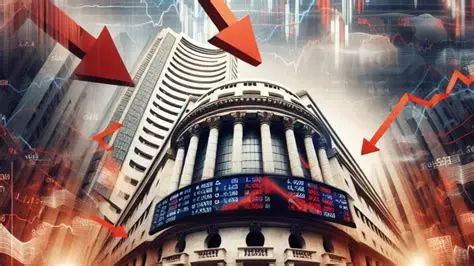
Indian equity markets started the trading session on a weak note as investors reacted to losses in global markets, particularly a sharp decline on Wall Street. The Sensex slipped more than 500 points in early trade, while the Nifty 50 opened around 150 points lower. The downturn reflects cautious investor sentiment following the overnight sell-off in the United States.
Weak Start for Indian Equities
Domestic stock markets opened significantly lower as global market cues weighed heavily on investor sentiment. The benchmark BSE Sensex dropped more than 500 points shortly after trading began, signaling broad-based selling across several sectors. At the same time, the NSE Nifty 50 index started the day about 150 points below its previous close.
Market participants pointed to global uncertainty and weak cues from the United States as key reasons behind the negative start. Investors remained cautious after major American indices closed sharply lower overnight, raising concerns about potential spillover effects on Asian markets.

The early losses in India highlight how closely domestic markets track global trends, particularly movements in major economies such as the United States.
Wall Street Decline Impacts Global Sentiment
The sell-off in Indian markets follows a difficult session on Wall Street, where major US indices recorded significant declines. The drop in American markets triggered risk-averse sentiment among investors worldwide, leading to cautious trading across Asian exchanges.
When US markets experience heavy losses, global investors often reassess their portfolios and reduce exposure to riskier assets. This trend frequently influences markets in Asia, including India, as traders react to overnight developments.

Analysts note that global economic concerns, including interest rate outlooks and geopolitical developments, have increased volatility in financial markets. As a result, investors are becoming more selective and cautious with their investments.
Sectoral Pressure Across the Market
Selling pressure was visible across multiple sectors in the Indian market during early trading hours. Banking, information technology, and metal stocks were among those facing declines as investors moved to reduce risk exposure.
Technology companies often react strongly to developments in US markets because of their close ties to global economic conditions and the American tech sector. Banking stocks also tend to experience volatility when broader market sentiment turns negative.

While the decline affected several sectors, some defensive stocks showed relatively smaller losses, indicating that investors were shifting funds toward safer options amid the uncertainty.
Global Factors Driving Market Volatility
Several global factors have contributed to the recent volatility in financial markets. Rising geopolitical tensions, concerns about economic growth, and uncertainty surrounding central bank policies have all played a role in shaping investor behavior.
Interest rate expectations in the United States remain a major focus for global investors. When there is speculation about higher borrowing costs, equity markets often face pressure because tighter monetary policy can slow economic activity.

In addition, fluctuations in the US dollar and global commodity prices can also influence market performance. These factors tend to affect emerging markets like India more strongly because they impact foreign investment flows.
Investor Strategy Amid Uncertainty
Market experts advise investors to remain cautious during periods of heightened volatility. While short-term fluctuations can create uncertainty, long-term investors often focus on strong fundamentals rather than daily market swings.
Some analysts suggest that corrections can also present opportunities for investors who are looking to accumulate quality stocks at lower prices. However, they emphasize the importance of diversification and careful risk management during uncertain market conditions.
Retail investors, in particular, are encouraged to avoid making impulsive decisions based on short-term movements and instead consider their long-term financial goals.
Outlook for the Trading Session
Despite the weak opening, market participants will closely monitor how trading evolves throughout the day. Factors such as global market movements, currency fluctuations, and institutional trading activity could influence the direction of the market.
If global sentiment improves or if buying emerges in key sectors, the indices may recover some of the early losses. On the other hand, continued selling by foreign investors could keep markets under pressure.

Conclusion
Indian stock markets began the day in negative territory, with the Sensex falling more than 500 points and the Nifty opening about 150 points lower after a sharp decline on Wall Street. The downturn reflects global market concerns and cautious investor sentiment. As trading continues, market participants will watch international cues and domestic developments to determine whether the market can recover from the early losses or extend its decline.






Leave a Comment